
Home About Case Studies Contact
PL Design
Year
2022-2023

Roles
Product Design
Information Architecture
UX Research
Systems Thinking
Feature Concept Development

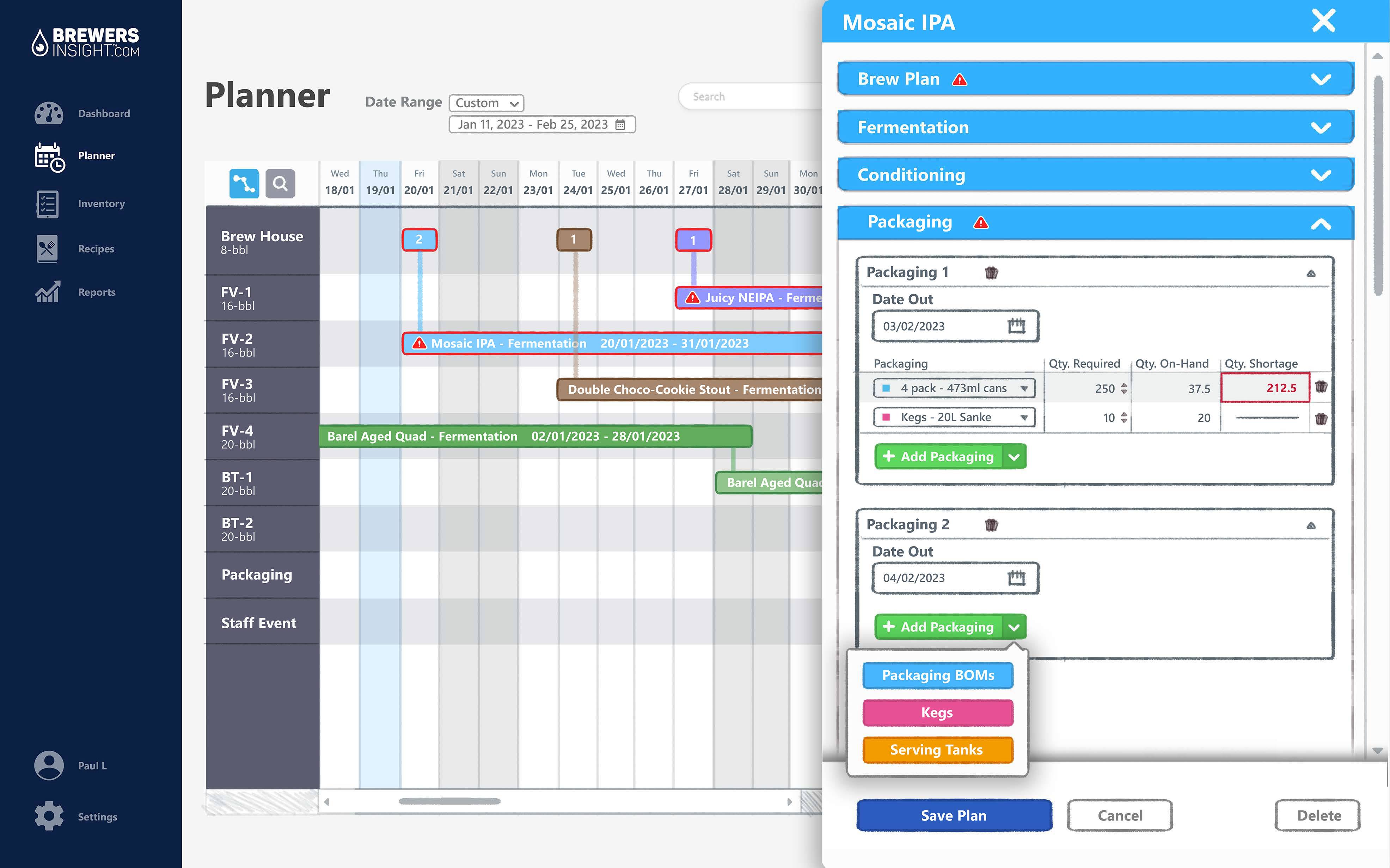
Brewers Insight is brewery management software used to plan and track production operations. I was brought in to conceptualize and design a new planning module, introducing a timeline-based interface for coordinating brewing, conditioning, and packaging activities.

What began as a feature request evolved into designing a subsystem that integrated deeply with existing production data and workflows.


Rough concept for BI planner feature and sidebar modal.

MVP Concept: Brew Planner


Problem

The platform lacked a centralized way to visualize production schedules across tanks, batches, and timelines. Planning was fragmented, increasing the risk of scheduling conflicts and operational downtime.

The challenge was structural clarity rather than surface polish.

The planner needed to:

  • Integrate with existing production data
  • Represent time-based dependencies
  • Surface conflicts and overlaps
  • Scale with future operational complexity
The Process

System Mapping

Mapped real-world brewery production stages into structured digital workflows, identifying dependencies and constraints.

Interface Structure

Designed timeline-based planning logic, hierarchical data visibility, and visual conflict indicators.

Implementation Awareness

Although deliverables were concuptual mockups and system diagrams, the designs were developed with technical feasibility in mind. The feature was built by engineering and remains in use within the live product.

Outcome

  • Introduced structured production planning capability
  • Expanded product positioning beyond basic tracking
  • Increased operational visibility for users
  • Established scalable groundwork for future planning tools
Strategic Takeaways

  • Complex features often evolve into subsystems
  • Early structural thinking reduces downstream friction
  • Implementation-aware design improves engineering collaboration
  • Operational tools require clarity over decoration


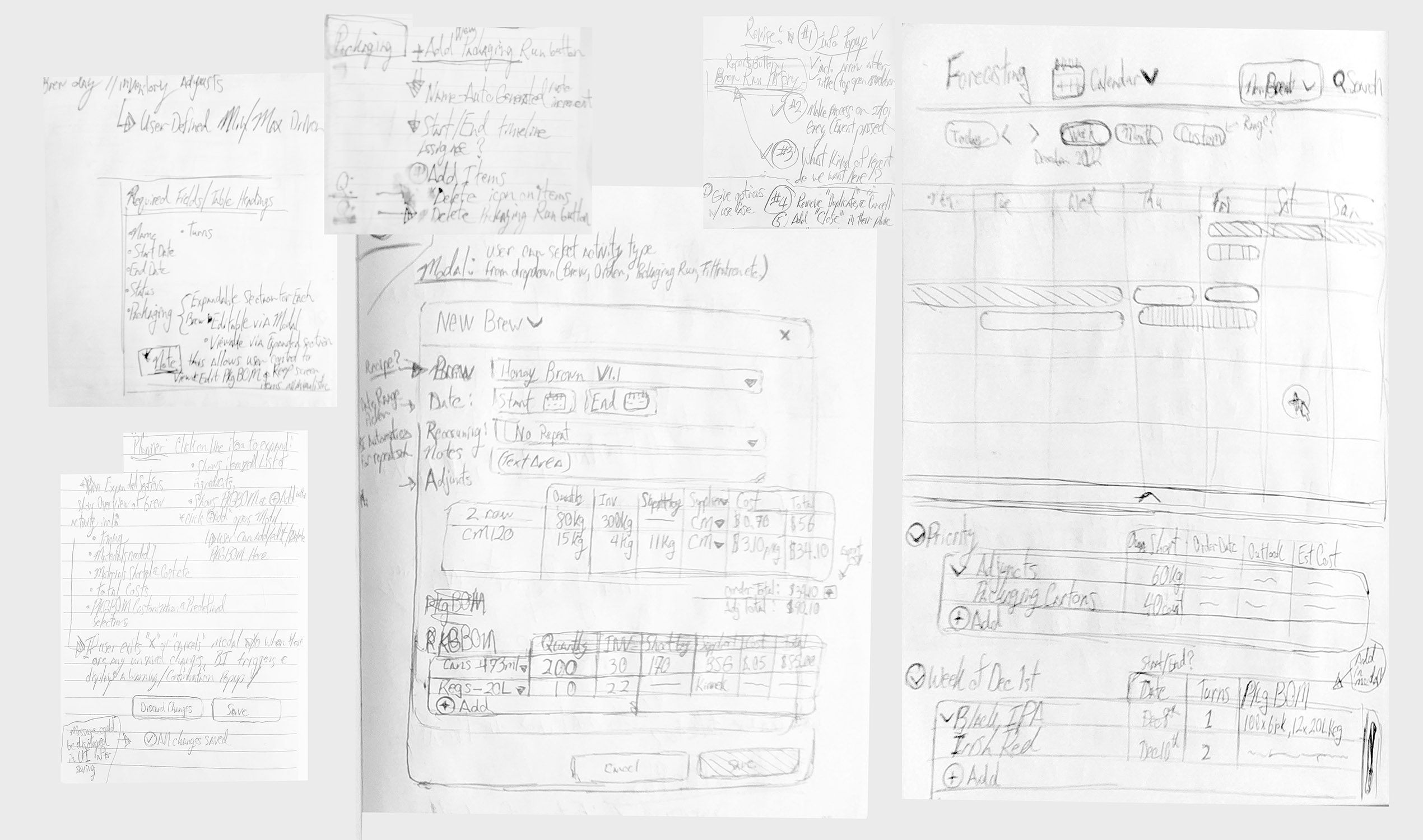
UX Ideation | Brainstorming


Early sketches exploring potential structures for a production planning interface and identifying the components required to support brewery workflows.


Planner User Flows


Designing the planning module required mapping a large system of interconnected workflows. These flows illustrate how brewers create production batches, configure fermentation and packaging stages, split batches across outputs, and forecast ingredient demand based on upcoming production.


System Workflow Overview

System map of the workflows supporting production planning, reporting, batch configuration, batch splitting and forecasting.


Key Workflow Examples


The following flows highlight several core operational tasks supported by the planner.


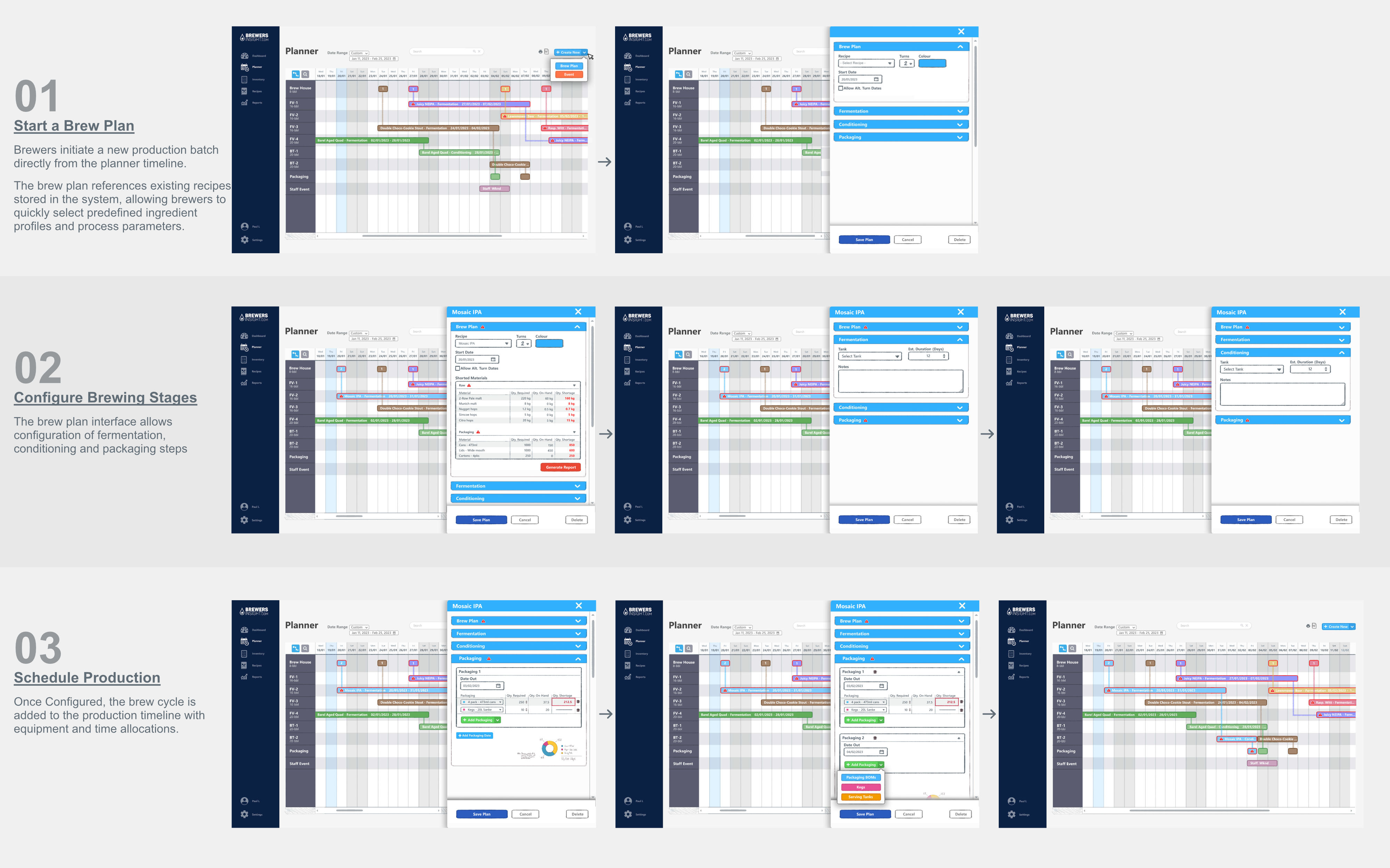
Creating a Production Batch

Brewers initiate a new production batch directly within the planner timeline. Recipes stored in the system provide predefined ingredient requirements and process stages, allowing batches to be created quickly while maintaining consistency across production runs.

The configuration panel allows brewers to define fermentation, conditioning and packaging stages before committing the batch to the production schedule.


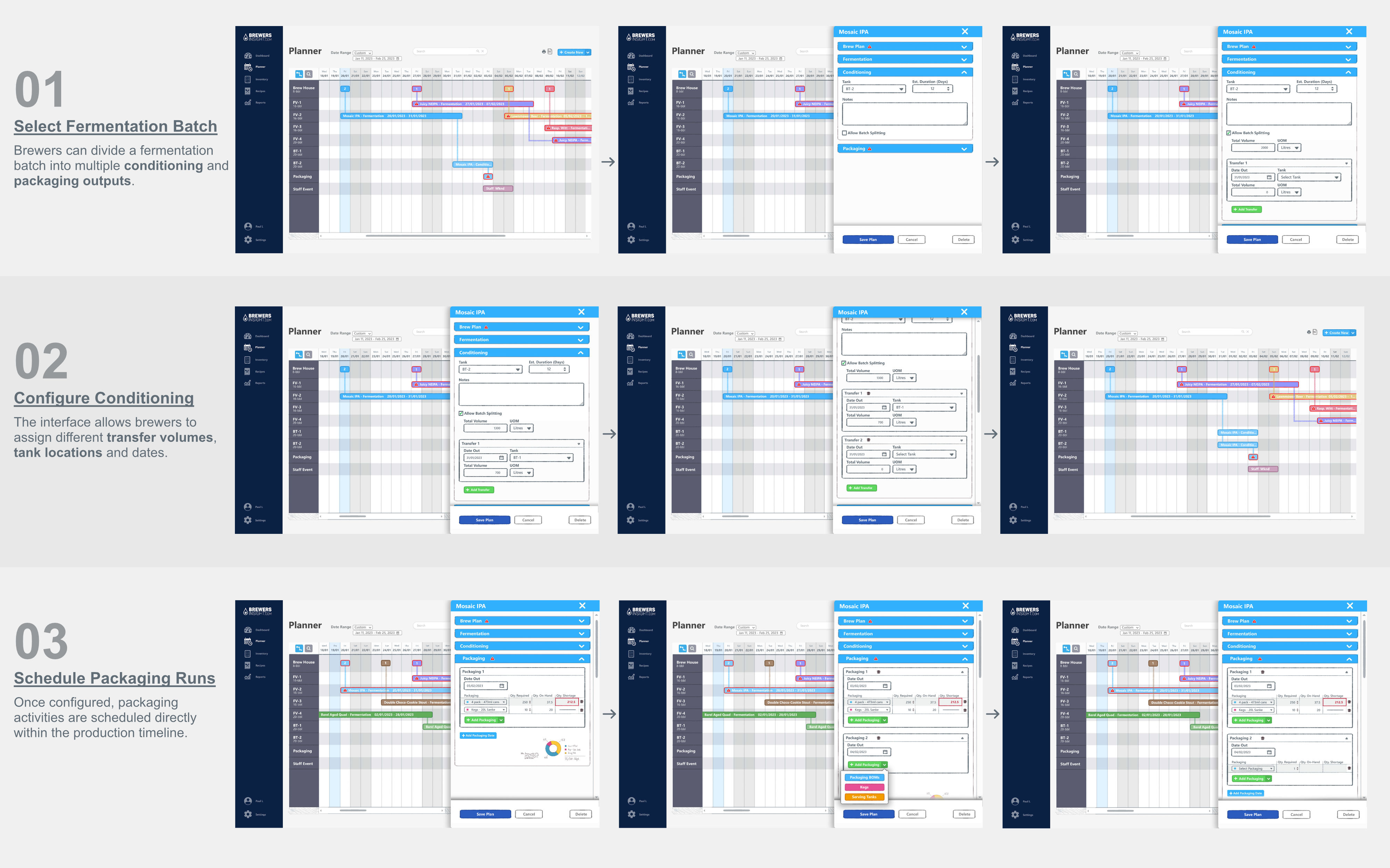
Splitting Fermentation into Packaging Runs

After fermentation, batches can be divided across multiple conditioning tanks or packaging outputs. The batch splitting workflow allows brewers to allocate volumes, configure transfers and manage packaging formats while maintaining visibility of total batch quantities.

This flexibility enables breweries to adapt packaging plans without disrupting upstream production scheduling.


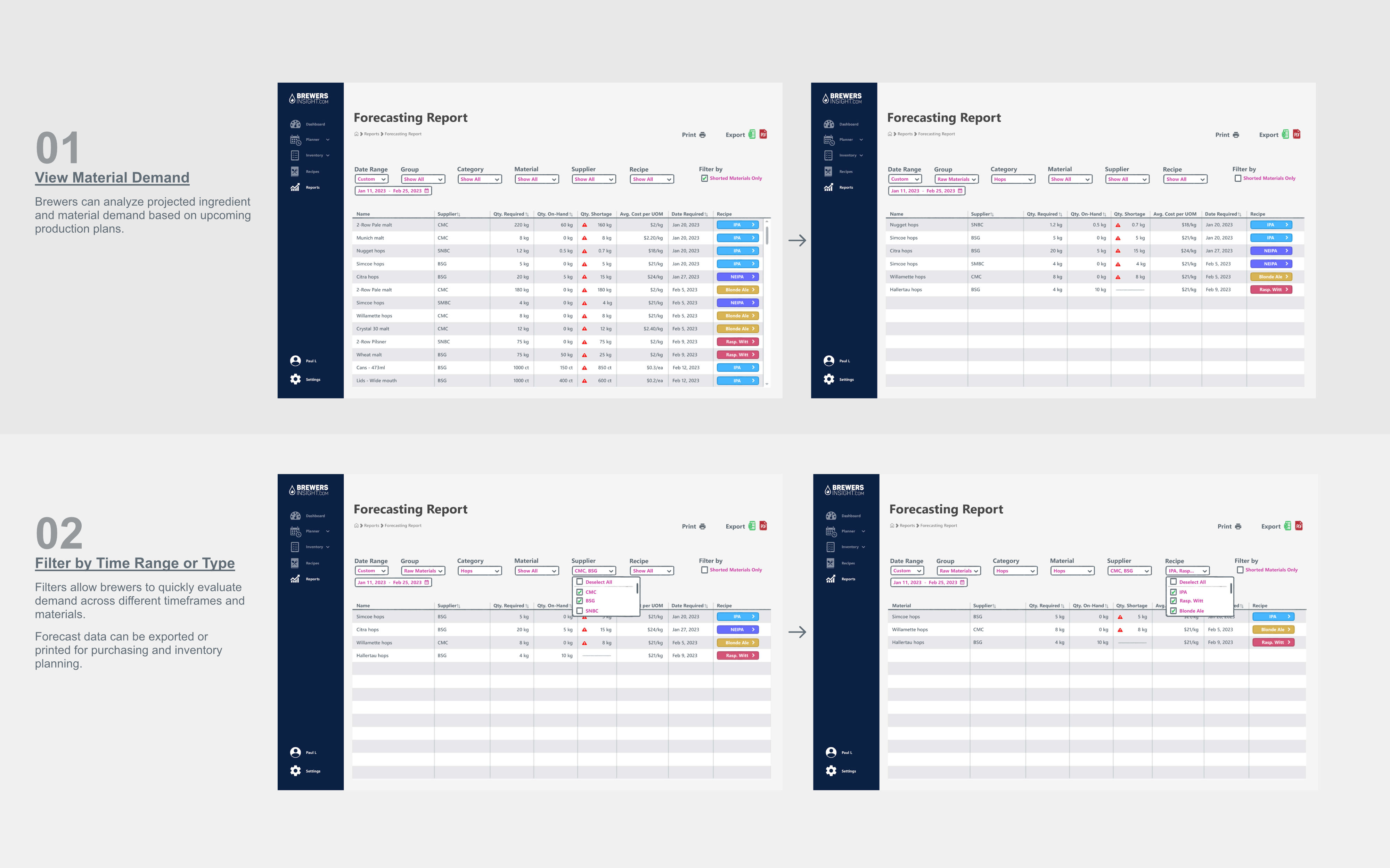
Forecasting Material Demand

Production schedules automatically generate projected ingredient demand based on recipe requirements and upcoming batches.

Brewers can filter forecasts by time range, ingredient category or supplier to identify shortages early and support purchasing and inventory planning.


Reflection


This project combined several of my interests in production systems and operational software design. Designing a planning interface for brewery operations required understanding how real-world production stages interact across time, equipment and scheduling constraints.

The feature was already partially implemented when I became involved, and several technical decisions had already been made. My contribution focused on refining the structure of the planning interface, improving workflow clarity and expanding the configuration tools used to manage fermentation, conditioning and packaging stages.

One key takeaway was the importance of designing operational tools around real processes rather than individual screens. Production environments benefit from interfaces that reveal complexity gradually while maintaining a clear overview of schedules and resource usage.

Case Studies

PRODUCT DESIGN   ●   EDTECH


Binogi

Improving how students discover and engage with learning content
Read More

PRODUCT DESIGN   ●   EDTECH


Binogi

Improving how students discover and engage with learning content
Read More

WEB DESIGN   ●   AGTECH


Resson Ag-Tech

Redesigning the digital presence of an agricultural technology company
Read More

WEB DESIGN   ●   AGTECH


Resson Ag-Tech

Redesigning the digital presence of an agricultural technology company
Read More

WEB REDESIGN   ●   MINETECH


Scient Analytics

Modernizing the website and branding of a mining technology company
Read More

WEB REDESIGN   ●   MINETECH


Scient Analytics

Modernizing the website and branding of a mining technology company
Read More